How do you clarify the challenge promise?
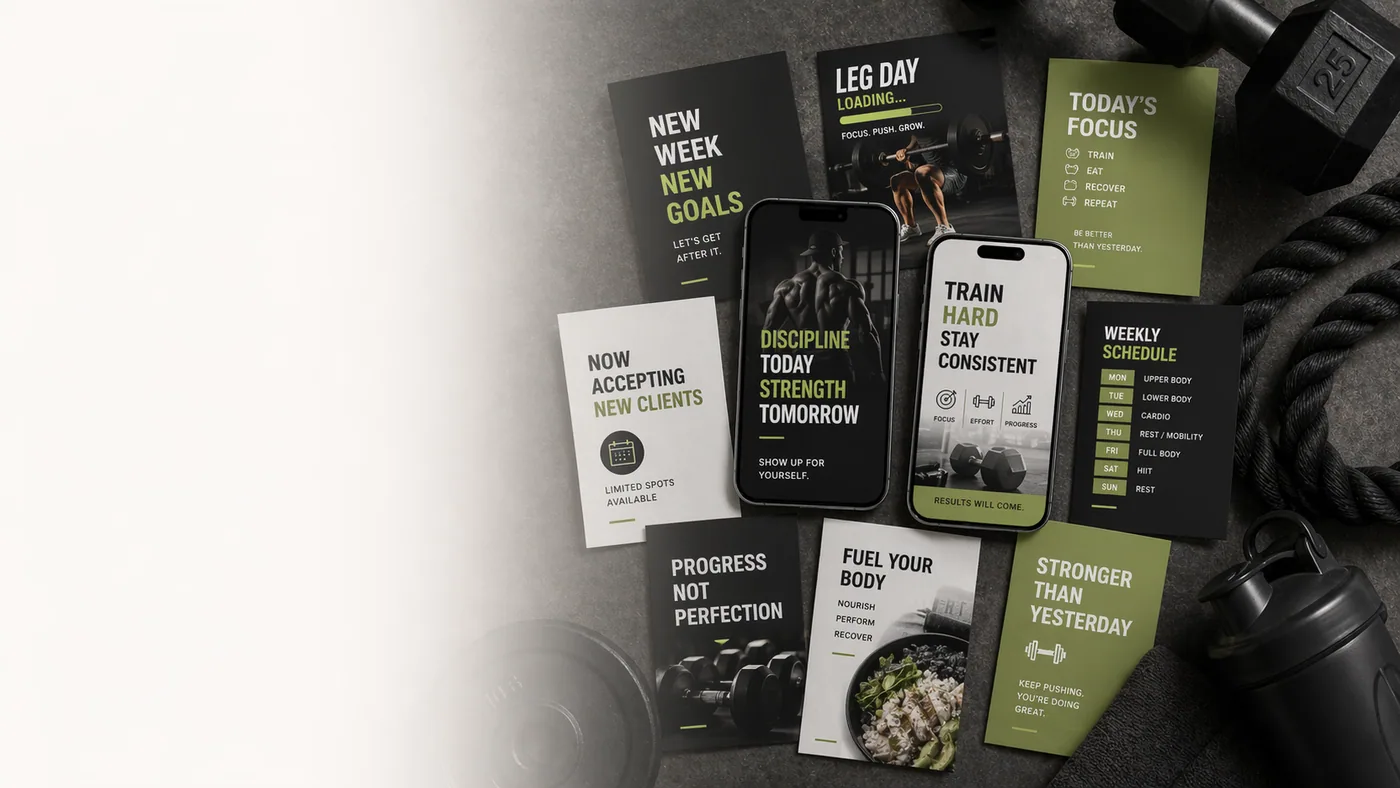
The first asset should answer the basics: challenge length, start date, audience, result direction, and signup method. Avoid vague claims and focus on the structure the participant can understand.
A 7-day reset, 14-day habit builder, and 30-day transformation push need different messaging even when they use the same visual system.
How do you build urgency with real deadlines?
Urgency works when it is true. Use start dates, enrollment windows, class capacity, bonus deadlines, or onboarding calls instead of fake pressure.
Story reminders and countdown posts are useful because they keep the decision visible while the window is open.
How should you use proof responsibly?
Transformation proof, testimonials, attendance wins, and coach process content can all help. The key is to only use proof you have permission to use and avoid promising identical results.
Proof content should lead back to the signup step, not sit alone as motivation.
How do you give the campaign a sequence?
A strong challenge push can use announcement, benefits, proof, FAQ, reminder, and final-call content. This sequence handles hesitation before the signup window closes.
Use the same CTA throughout: join the challenge, DM the keyword, book the consult, or reserve a spot.
How do you sell the challenge structure without vague transformation claims?
Fitness challenge promo content converts when the participant understands what they are joining. Name the length, start date, schedule, accountability, support, and signup step before trying to sell the result.
Transformation language without structure feels risky. Structure makes the challenge easier to believe and easier to join.
How should you use proof without overpromising?
Proof should reduce doubt, not create unrealistic expectations. Use approved client context, coach process, class clips, habit wins, or common questions. Tie every proof asset back to the signup CTA.
The strongest copy sounds grounded: see if this challenge fits your schedule, ask about the start date, or book the consult before enrollment closes.
How do you repeat one enrollment action?
Challenge campaigns lose conversions when every post asks for a different action. Pick the primary path and repeat it: DM the keyword, join the list, book the consult, or reserve a spot.
The content can answer different objections, but the action should stay stable until the enrollment window closes.
How do you move interested people into a trackable signup flow?
A fitness challenge can create a lot of comments and DMs, but the business still needs a clean follow-up path. Decide whether the next step is a checkout link, consult booking, intake form, or DM keyword before the campaign starts.
Then repeat that same action on every asset. High-converting challenge content makes interest easy to capture and easy to follow up before motivation fades.
What does current guidance change about this plan?
We compared federal physical-activity guidance with FTC health advertising and testimonial rules, then applied those sources to challenge enrollment, progress content, and participant proof.
Challenge content should describe the program before promising an outcome
Federal physical-activity guidelines provide broad evidence-based recommendations, but they do not guarantee that one challenge produces a particular individual result. Marketing should distinguish the program structure from expected outcomes.
How to apply itState session type, frequency, eligibility, coaching, modifications, start date, and enrollment step. Send health-specific claims to a qualified reviewer and avoid universal transformation promises.
Review Health.gov: Current Physical Activity GuidelinesHealth claims require appropriate evidence
FTC guidance says health-related claims need competent and reliable scientific evidence appropriate to the claim. Disclaimers cannot rescue a strong main message that is otherwise misleading.
How to apply itMaintain a claim library with approved wording and evidence. Remove claims about rapid weight loss, treatment, prevention, or guaranteed performance unless they have been specifically reviewed and supported.
Review FTC: Health Products Compliance GuidanceParticipant stories should not imply a typical result without support
FTC endorsement guidance applies to testimonials that communicate product or service performance. An exceptional result can mislead when viewers are likely to interpret it as representative.
How to apply itDocument consent, the participant's actual experience, material connections, and the basis for any typical-results statement. Keep enrollment content focused on fit and process rather than an outlier transformation.
Review FTC: Endorsements, influencers, and reviewsWhich useful examples can you adapt?
These are not fake captions to copy word for word. Use them as structure, then replace the proof, timing, and CTA with real business details.
For a six-week program, name the start date, weekly schedule, coaching format, best-fit participant, consult path, and realistic expectations.
Replace every detail with the current business facts, then keep only the evidence needed to book the consult or reserve a place.
Can the prospect tell whether the program fits their current level and schedule?
Answer with one approved input from coach process notes, class or consult details, approved client context, realistic program expectations, and schedule facts. Do not add a claim that the source material cannot support.
Does the proof explain the process without promising identical results?
Use the caption to remove that friction, then tell the reader how to book the consult or reserve a place without introducing a second CTA.
Which authoritative sources should the practice review?
Use these sources as a starting point, then follow the laws, professional rules, and qualified advice that apply to the practice and its location.
- Health.gov: Current Physical Activity Guidelines Current federal physical-activity guidance and links to the evidence base behind it.
- FTC: Health Products Compliance Guidance FTC guidance on clear disclosures, competent and reliable scientific evidence, and truthful health-related advertising.
- FTC: Advertising FAQs for small business The FTC's plain-language guidance on truthful, non-deceptive advertising and the evidence expected behind objective claims.
- FTC: Endorsements, influencers, and reviews FTC guidance and resources for testimonials, endorsements, material connections, and consumer reviews.
- FTC: Consumer Reviews and Testimonials Rule Q&A FTC answers about fake reviews, incentives, review suppression, insider testimonials, and related practices.